
- Posts: 16
- Thank you received: 0
Human Design helps us understand what sets us apart from others!
10 months 3 weeks ago - 10 months 3 weeks ago #3
by villy83
Human Design is a comprehensive system that merges ancient wisdom and modern science to help individuals understand their unique identity, purpose, and how to live authentically.
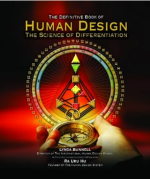
It was created in 1987 by Ra Uru Hu, who claimed to have received the knowledge during an eight-day encounter with a mysterious "Voice."
This system synthesizes elements from ancient traditions like Astrology, the I Ching, the Chakra system, and the Kabbalah’s Tree of Life, alongside modern disciplines such as Quantum Mechanics, Genetics, Astronomy, and Biochemistry.
The result is a tool that offers deep insights into how we can live in alignment with our true nature.Core Principles of Human Design.
At its heart, Human Design is about differentiation—helping us detach from societal expectations and reconnect with our individuality.
It provides a framework for understanding our unique energy flow, decision-making process, and life purpose.
The system is based on a Human Design Chart, which is calculated using your birth date, time, and location.
This chart serves as a blueprint for your life, revealing key aspects of your personality, energy, and how you interact with the world.
Key Components of Your Human Design Chart
Human Design categorizes people into five energy types, each with its own unique role and way of interacting with the world:
Human Design offers a practical framework for living authentically.
It helps us break free from societal conditioning and reconnect with our true selves.
By understanding our energy type and strategy, we can make decisions that are in alignment with our nature, leading to greater fulfillment and less resistance in life.
It also helps us appreciate the diversity of human energy, recognizing that each type has a unique role to play in the world.
Human Design is a tool for self-discovery and empowerment. By understanding your chart, you can gain clarity on your purpose, improve your decision-making, and live a life that feels true to who you are.
Whether you’re a Manifestor, Generator, Projector, Reflector, or Manifesting-Generator, Human Design offers a roadmap for living in alignment with your authentic self.
The article is a synthesis of:
It was created in 1987 by Ra Uru Hu, who claimed to have received the knowledge during an eight-day encounter with a mysterious "Voice."
This system synthesizes elements from ancient traditions like Astrology, the I Ching, the Chakra system, and the Kabbalah’s Tree of Life, alongside modern disciplines such as Quantum Mechanics, Genetics, Astronomy, and Biochemistry.
The result is a tool that offers deep insights into how we can live in alignment with our true nature.Core Principles of Human Design.
At its heart, Human Design is about differentiation—helping us detach from societal expectations and reconnect with our individuality.
It provides a framework for understanding our unique energy flow, decision-making process, and life purpose.
The system is based on a Human Design Chart, which is calculated using your birth date, time, and location.
This chart serves as a blueprint for your life, revealing key aspects of your personality, energy, and how you interact with the world.
Key Components of Your Human Design Chart
- Profile: This represents your personality and how you interact with others. It’s a combination of two numbers that reflect your conscious and unconscious traits.
- Authority: This is your inner guidance system—how you make decisions that are aligned with your true self. For example, some people have a "Sacral Authority," which means they should trust their gut feelings, while others have an "Emotional Authority," meaning they should wait for emotional clarity before deciding.
- Energy Type: This is the foundation of your Human Design and determines how you operate in the world. There are five energy types, each with its own unique characteristics and strategies for living authentically.
- Strategy: This is the way you should approach life to minimize resistance and maximize flow. For example, Generators are advised to "respond" to opportunities rather than initiate, while Manifestors should "inform" others before taking action.
- Not-Self (Undefined Centers): These are the blank areas in your chart that represent where you’re most influenced by external energies. Understanding these can help you identify where you might be living out of alignment with your true self.
- Gifts and Channels: These are the natural talents and strengths that you bring to the world. They are the pathways through which your energy flows most effectively.
Human Design categorizes people into five energy types, each with its own unique role and way of interacting with the world:
- Manifestors (8-10% of the population): Manifestors are the initiators and pioneers. They are here to start new projects and bring ideas to life. Their strategy is to inform others before taking action, as their energy can be disruptive if not communicated. Manifestors often feel misunderstood because they operate independently, but their role is to lead and inspire. Famous Manifestors include Frida Kahlo and Steve Jobs.
- Generators (70% of the population): Generators are the builders and doers of the world. They have a consistent, sustainable energy that allows them to work on projects they’re passionate about. Their strategy is to respond to opportunities rather than initiate, as they thrive when they’re engaged in work that excites them. Generators are often happiest when they’re in flow, doing what they love. Examples include Beyoncé and Oprah Winfrey.
- Projectors (20% of the population): Projectors are the guides and leaders. They have a unique ability to see and understand systems, people, and processes. Their strategy is to wait for recognition—they should only offer guidance when they’re invited, as their energy is not designed for constant doing. Projectors often feel burned out when they try to keep up with the hustle culture, but they thrive when they’re recognized for their wisdom. Famous Projectors include Barack Obama and Albert Einstein.
- Reflectors (1% of the population): Reflectors are the rarest type, making up only 1% of the population. They are highly sensitive and act as mirrors, reflecting the health and well-being of the people and environments around them. Their strategy is to wait a full lunar cycle (28 days) before making major decisions, as they need time to process the energies they absorb. Reflectors are here to show us what’s working and what’s not in our communities. Examples include spiritual leaders like Amma.
- Manifesting-Generators (MGs): MGs are a hybrid of Manifestors and Generators, making up about 30% of the population. They have the ability to initiate like Manifestors and the sustained energy of Generators. Their strategy is to respond and inform—they should wait for opportunities to respond to, but once they’re in motion, they can move quickly and efficiently. MGs are multi-passionate and often juggle multiple projects at once. Famous MGs include Tony Robbins and Lady Gaga.
Human Design offers a practical framework for living authentically.
It helps us break free from societal conditioning and reconnect with our true selves.
By understanding our energy type and strategy, we can make decisions that are in alignment with our nature, leading to greater fulfillment and less resistance in life.
It also helps us appreciate the diversity of human energy, recognizing that each type has a unique role to play in the world.
Human Design is a tool for self-discovery and empowerment. By understanding your chart, you can gain clarity on your purpose, improve your decision-making, and live a life that feels true to who you are.
Whether you’re a Manifestor, Generator, Projector, Reflector, or Manifesting-Generator, Human Design offers a roadmap for living in alignment with your authentic self.
The article is a synthesis of:
- Ancient spiritual systems (Astrology, I Ching, Chakras, Kabbalah)
- Modern scientific fields (Quantum Mechanics, Genetics, Astronomy, Biochemistry)
- Human Design teachings (Ra Uru Hu’s writings, Jenna Zoë’s book)
Last edit: 10 months 3 weeks ago by villy83.
Please Log in or Create an account to join the conversation.
Time to create page: 0.272 seconds